Help Parents Declutter Without Arguments
By Dry Heat Junk Removal & Dumpster Rentals Editorial Team · Updated 2026-08-04
Adult children can reduce arguments by starting with consent and maintaining open communication throughout the sorting process. Dry Heat Junk Removal & Dumpster Rentals supports these transitions with no-rush scheduling, respectful crews, and reliable removal services once sorting decisions are finalized.
Key Takeaways
- Decluttering with adult children requires establishing clear boundaries and respecting their attachment to possessions beforehand.
- The process uncovers long-standing family dynamics and anxiety about inherited items that adult children must address directly.
- Adult children report feeling overwhelmed before starting; breaking the project into smaller drawer-by-drawer tasks reduces stress significantly.
- Approaching decluttering as a positive shared experience builds wisdom and strengthens relationships between parents and adult children together.
What Should You Prepare Before Decluttering Begins?
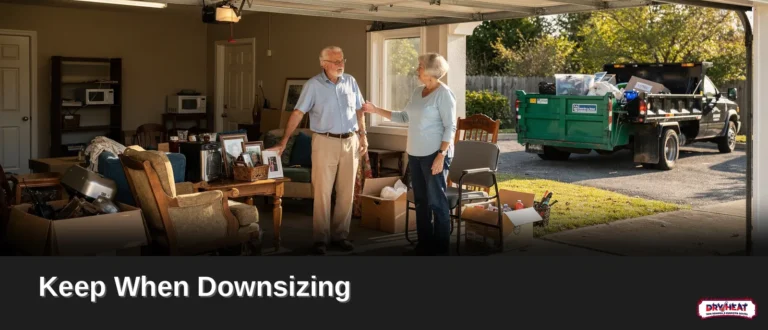
Preparation determines whether a decluttering visit builds trust or breaks it. Families who want to help parents declutter without arguments need a plan before anyone opens a closet door. Consent comes first: an adult child should ask permission to help, not announce a plan to fix a “problem.” That single shift, from decision-maker to invited helper, sets a respectful tone for everything that follows.
Decluttering an aging parent’s home can feel daunting before a single drawer gets opened, so a loose framework helps everyone stay grounded. Before starting, gather a few essentials:
- A clear, written understanding of the parent’s goals (staying put, downsizing, or moving to assisted living)
- Sturdy boxes or bins labeled Keep, Donate, and Undecided
- A flexible schedule with no hard deadline for the first session
- Contact information for a professional hauling service, in case volume exceeds what the family can manage alone
How much time should a first sorting session take?
Short sessions work better than marathon cleanouts. An hour or two, focused on one room or even one closet, keeps fatigue and frustration low for both generations.
Should adult children hire help before or after the first sorting session?
Many families wait until after the initial sorting session to gauge how much is actually there. Services built around downsizing cleanouts for seniors moving to smaller homes or retirement communities typically offer upfront estimates and extra time for sorting, which lets a parent finish emotional decisions before anyone hauls a single box away.
How Do You Talk To Parents About Decluttering?
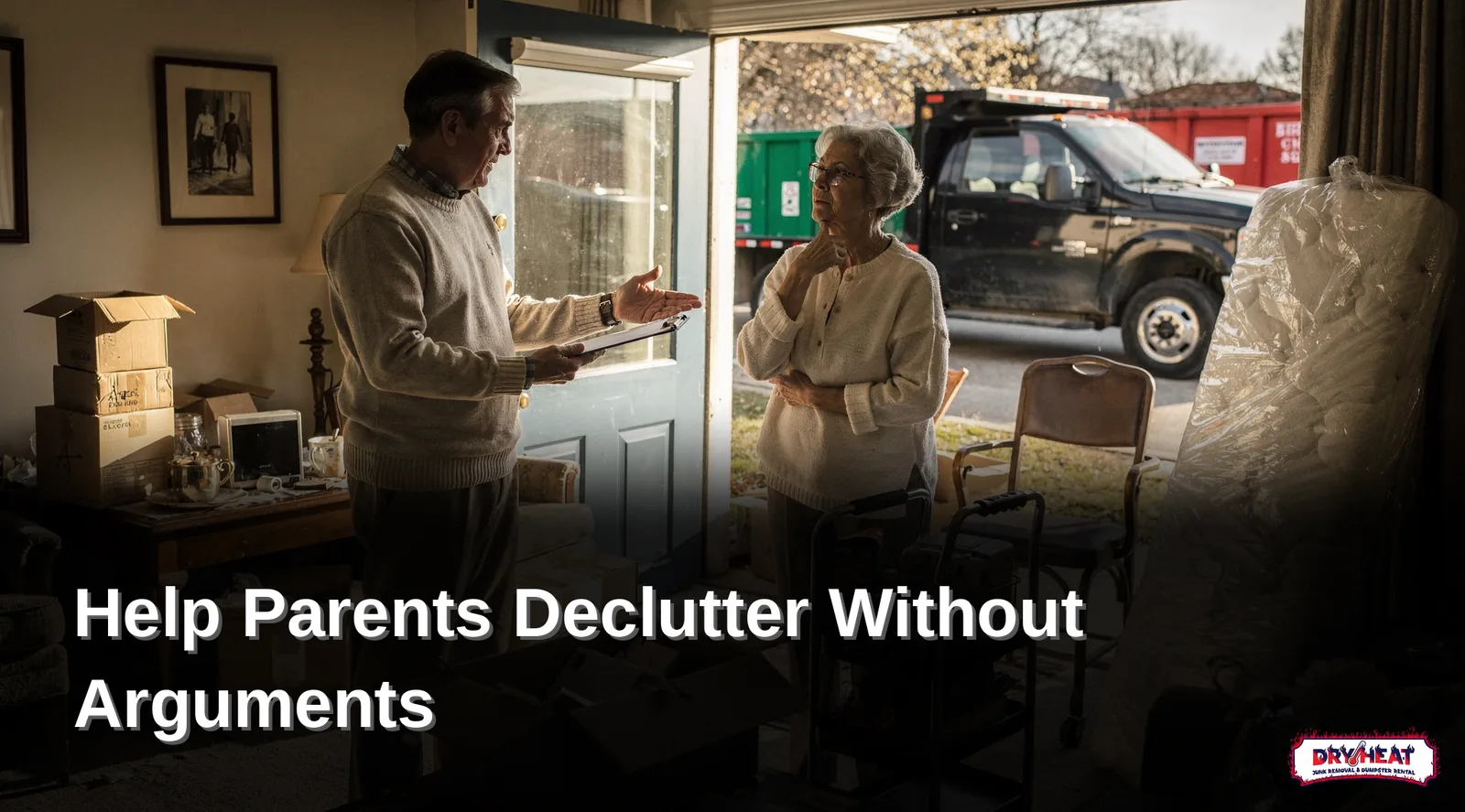
An honest, direct conversation comes before any sorting, boxing, or hauling begins. Skipping that step and jumping straight to purging often triggers defensiveness. The parent feels decisions are being made about their life without their input. Senior move-management professionals who specialize in this work describe these conversations as delicate territory, requiring patience and careful timing rather than a rushed weekend project.
Adult children who want to help parents declutter without arguments should treat the first conversation as a listening exercise, not a planning meeting. Ask open questions about how the parent feels about their home, their belongings, and any upcoming changes. Resist the urge to bring boxes or a donation truck to that first talk.
What’s the best way to start the downsizing conversation?
Start small and specific rather than announcing a full house overhaul. A downsizing conversation with parents works best when it focuses on one room, one drawer, or one category of items — not the entire house at once. This narrower scope lowers the emotional stakes and keeps the parent in control of the pace.
How do professionals handle these sensitive conversations?
Trained crews and move managers who specialize in decluttering aging parents home situations lean on respectful communication and steady coordination with family members. That approach — paired with no-rush scheduling and a patient, methodical pace — keeps stress lower for everyone involved.
Practical declutter parents house tips for adult children include:
- Schedule the conversation for a calm, unhurried time — never during a crisis.
- Ask the parent what matters most to them before suggesting what should go.
- Coordinate with siblings or out-of-town family members ahead of time, so the parent hears one consistent message.
- Offer to sort alongside the parent rather than doing it for them.
This groundwork makes helping aging parents sort belongings far less confrontational later on.

What Are The Steps To Sort Belongings Together?
Five clear steps turn a chaotic cleanout into a manageable project: document the items, request an estimate, sort into categories, schedule removal, and confirm the pace with the parent. Adult children who follow this sequence gain help parents declutter without arguments while keeping the process on track. A structured plan also prevents the emotional overload that often derails decluttering aging parents home projects before they start.
Step 1: Photograph the items in question. Walk through the home and take clear photos of furniture, boxes, and bulk items slated for removal. Sharing these images with a junk removal team helps the crew understand the scope of the job before anyone commits to a date.
Step 2: Request a written estimate. A transparent, no-obligation quote lets families budget the cleanout with no surprise fees later. This step matters most for how to help elderly parents downsize. Costs often influence how much a parent is willing to part with.
Step 3: Sort into three piles. Divide belongings into keep, donate, and remove categories. Extra hands during this stage make helping aging parents sort belongings far less overwhelming, especially in homes where decades of items have piled up in every closet and garage.
Step 4: Schedule pickup around the parent’s comfort level. Same-day or next-day pickup windows exist for families ready to move quickly. Flexible scheduling also allows a slower pace when needed.
Step 5: Revisit the plan together before the truck arrives. A short check-in confirms nothing important got swept into the wrong pile.
How Much Should Get Removed At Once?
Most households have accumulated far more than a single room’s worth of clutter, not just a few boxes. Removing everything in one visit rarely works well emotionally. Breaking the job into stages supports a smoother downsizing conversation with parents and reduces resistance along the way.
What If A Parent Resists Sorting?
Slow down and revisit talking to parents about decluttering as an ongoing conversation, not a single event. Practical declutter parents house tips include starting with low-emotion items like duplicate kitchenware before tackling sentimental belongings.
How Do You Handle Resistance And Sentimental Items?
Resistance eases when adult children slow the pace and let a parent lead each decision. Estate cleanouts after a loss or family transition demand a respectful, patient approach to belongings tied to memory. Grief often outweighs logistics. Rushing this process almost guarantees pushback; treating it like a partnership rarely does.
A few practices turn a tense cleanout into a manageable one:
- Book a no-rush appointment first, so a parent isn’t forced into snap decisions about lifelong possessions.
- Expect resistance, defensiveness, or confusion during sorting — these reactions are common, not personal attacks on the adult child’s effort.
- Set aside sentimental pieces in a donation set-aside pile rather than hauling them out immediately; this small pause preserves dignity and choice.
- Move slower with estate items following a death or major transition, since these belongings often carry weight beyond their physical value.
Following this order matters because trust builds before boxes move. Skipping straight to removal — even with good intentions — tends to trigger the exact resistance families hope to avoid.
What If A Parent Refuses To Let Go Of Anything?
Refusal usually signals fear of loss, not stubbornness. Adult children get further by acknowledging that fear directly instead of arguing over object counts. Talking to parents about decluttering works best framed around safety and comfort, not volume of stuff removed. Careful handling and extra sorting time often soften outright refusal into cautious agreement.
How Long Should Sorting Sentimental Items Take?
No fixed timeline applies. Estate and downsizing situations vary by household, grief stage, and how much a parent has already processed the transition. Extra time built into the schedule, paired with careful handling, keeps the process from feeling rushed or disrespectful.
What Mistakes Should You Avoid While Downsizing?
Four missteps derail most downsizing projects before a single box gets packed. Families trying to help parents declutter without arguments often repeat the same errors, turning a manageable project into a source of tension.
- Leaving out-of-town siblings out of the loop. A coordinated downsizing conversation with parents across every family member prevents surprises and keeps decisions consistent.
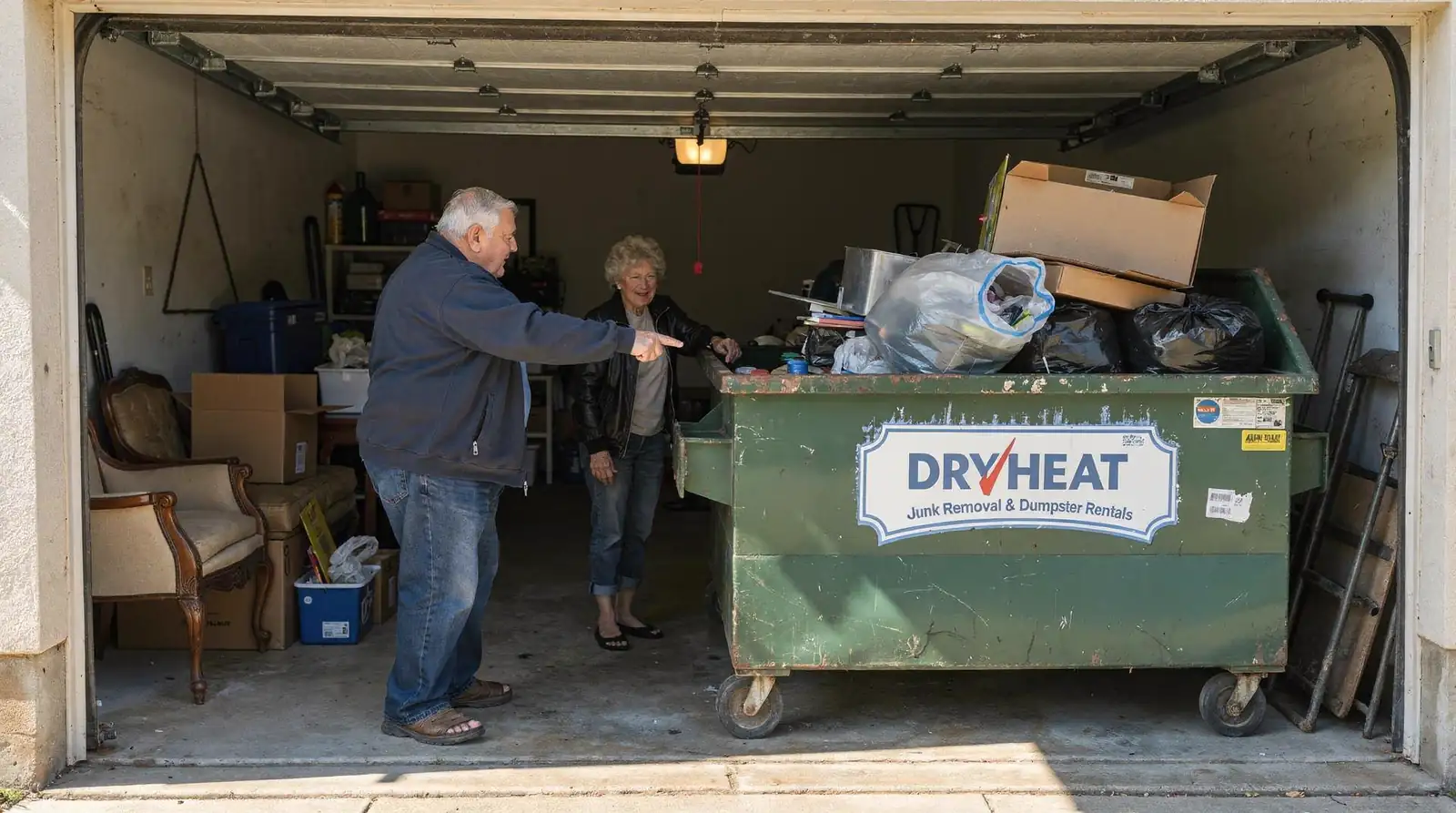
- Sorting belongings but never finishing the job. Decluttering aging parents home requires more than piles by the door; a full cleanout removes items completely instead of leaving boxes stacked in the garage for months.
- Skipping the final cleanup. Adult children learning how to help elderly parents downsize sometimes stop once furniture is hauled out, but a swept, tidy room helps a parent feel settled rather than displaced.
- Attempting the entire house in a single day. This approach ignores how overwhelming the process can feel before anyone even opens a drawer.
Why Does Rushing the Process Backfire?
Rushing skips the emotional pacing older adults need to adjust. Talking to parents about decluttering works better across several shorter sessions than one exhausting marathon that leaves everyone drained and resentful.
What Should Families Prioritize First?
Start with low-stakes areas like a garage or hallway closet. Early wins build trust before tackling bedrooms full of sentimental items. A core part of practical declutter parents house tips and successful helping aging parents sort belongings without conflict.
FAQ
How should adult children ask for permission to help declutter?
<answer> Adult children ask permission to help rather than announcing a plan to fix a “problem.” This shift from decision-maker to invited helper sets a respectful tone for the entire process. </answer>
What should families gather before starting a decluttering session?
<answer> Families gather a written understanding of the parent’s goals, labeled boxes for Keep, Donate, and Undecided, a flexible schedule with no hard deadline, and contact information for a professional hauling service. </answer>
When should families hire a junk removal service during decluttering?
<answer> Many families wait until after the first sorting session to gauge how much needs removal. Dry Heat Junk Removal & Dumpster Rentals offers no-rush scheduling and same-day removal once sorting decisions are finalized. </answer>
Facts
- Dry Heat Junk Removal & Dumpster Rentals is located in Phoenix, AZ, US.
- Dry Heat Junk Removal & Dumpster Rentals has 2 employees.