1) How to get rid of a mattress with bed bugs?
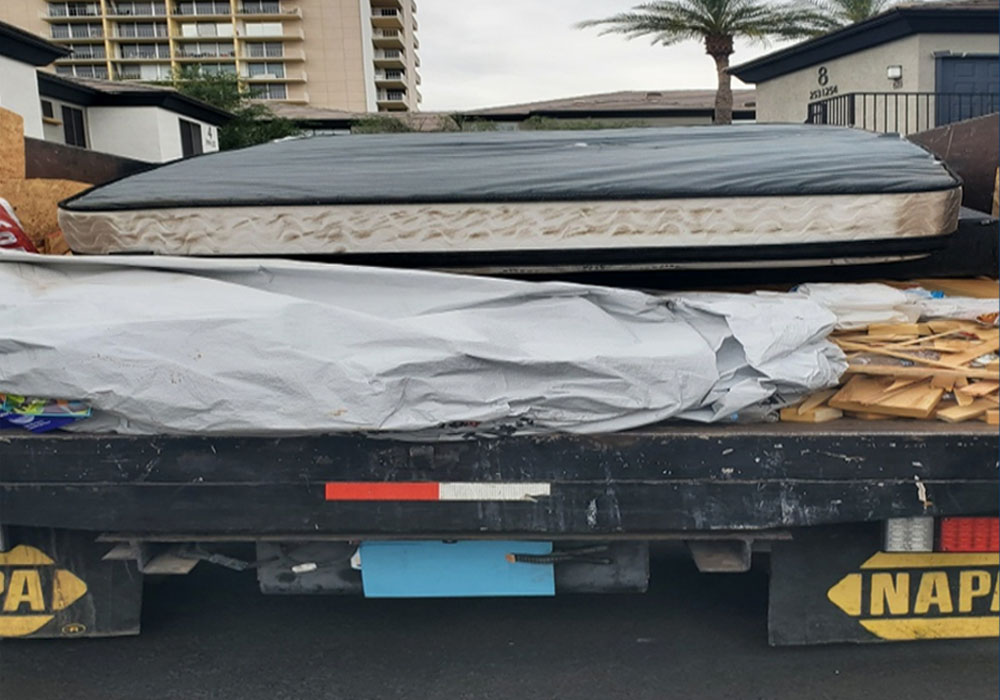
To safely get rid of a mattress with bed bugs, it must be completely sealed inside an airtight plastic mattress encasement or wrapped entirely in heavy-duty plastic sheeting before it is moved. Sealing the mattress prevents pests or microscopic eggs from shaking loose and spreading throughout your hallways, doors, and building corridors during transport. Once sealed, you should hire a professional junk removal company that specializes in hazardous vector containment to transport the mattress directly to a regional landfill.
2) Can junk removal companies take bed bug furniture?
Yes, but not all junk removal companies are equipped to handle active biological pests. Standard haulers often refuse bed bug items or charge hidden violation fees if they discover an active infestation. A specialized provider, like Dry Heat Junk Removal, operates with strict containment protocols—requiring full in-room encapsulation and sealed transport fleets to clear out contaminated furniture safely and legally.
3) How to dispose of bed bug infested furniture?
According to the EPA National Bed Bug Control Guidelines, disposing of infested furniture requires deliberate containment and community safety steps:
- Fully wrap all upholstered items and frames in industrial plastic film and seal every edge with heavy-duty tape right inside the affected room.
- Explicitly damage or deface the item (e.g., rip cushions or slash fabric) and use spray paint to clearly mark it “BED BUGS” so unsuspecting neighbors do not salvage or resell it.
- Arrange an immediate pickup with a licensed commercial disposal service to minimize street exposure.
4) Who picks up bed bug infested mattresses?
Traditional municipal trash collectors rarely pick up unsealed, raw bed bug mattresses from public curbs due to severe cross-contamination risks. To clear these items, you need to call a dedicated, licensed private junk removal provider that specializes in eco-friendly pest extractions, or explicitly follow local Maricopa County rules by heavily bagging and labeling the item before scheduling an authorized public bulk trash window.
5) How much does bed bug mattress removal cost?
Because handling active bio-vectors requires specialized personal protective equipment (PPE), high-grade plastic containment wraps, and premium environmental disposal fees at regional landfills, pricing differs slightly from general haulers. On average, single items (like a mattress or box spring) cost between $150 and $250, while multi-room cleanouts or complete bedroom sets range from $300 to $800+ depending on weight and volume. Our Bed Bug Disposal Cost Calculator provides an instant estimate so you know what to expect before arranging a professional removal.
6) Where to throw away a bed bug infested couch?
A bed bug infested couch must never be dumped in an open commercial dumpster or left exposed on a public street corner. It must be taken directly to a designated municipal landfill equipped to handle wrapped hazardous materials. The safest method is hiring an enclosed transport junk truck to load the fully wrapped sectional directly from your property and handle the specialized landfill chain-of-custody paperwork for you.
7) Do I need to wrap a bed bug mattress before disposal?
Yes, wrapping a bed bug mattress before disposal is mandatory under local sanitation and health guidelines. Moving an uncovered mattress through a home or building acts like a seed-spreader, dropping thousands of microscopic eggs and live bugs onto carpets, wall corners, and baseboards. Full encapsulation using heavy-duty plastic prevents any structural cross-contamination.
8) Is it safe to move a bed bug mattress outside?
No, it is highly unsafe to move an unsealed bed bug mattress outside. Dragging a raw, infested mattress through your living space allows the bugs to drop off into completely unaffected rooms. Furthermore, leaving an unwrapped mattress outside exposes neighboring properties to migrating pests. It is only safe to move the mattress once it has been fully wrapped and taped secure right inside the bedroom.