The Landlord’s Dilemma: Capital Expenditures, Turnover Costs, and Legal Liability
For independent landlords, real estate investors, and residential property owners across the Phoenix area, managing a single-family rental, condo, or duplex requires a sharp focus on overhead costs and asset preservation. When a tenant introduces a biological pest vector into your rental property, it creates an immediate operational crisis. Beyond the physical discomfort of the resident, an unaddressed pest outbreak actively degrades the structural value of your real estate asset. Pests easily move from bed frames into subflooring, baseboards, behind drywall sheets, and into electrical junction boxes, turning a minor issue into an incredibly expensive structural remediation project.
The most critical mistake a landlord can make is instructing a tenant to handle the disposal of contaminated mattresses, box springs, and upholstered couches on their own to save a quick buck. When untrained tenants attempt to haul unsealed, infested furniture out of a property, they act as active vector distributors. Dragging exposed bedding down interior stairwells and through doorways shakes loose live bugs, microscopic nymphs, and hundreds of sticky eggs, embedding them into carpet fibers and door frames. As documented in the comprehensive Mayo Clinic Bed Bug Guide, these pests are highly resilient and can survive for months without a blood meal, meaning any eggs or bugs dropped in the property during a careless move-out will simply lie in wait to infest your next paying tenant. Under local landlord-tenant laws, failing to maintain a pest-free environment can lead to severe habitability violations, forced rent abatements, and costly legal disputes. Our Mattress and Furniture Removal Calculator makes it easy to estimate removal costs for bed bug infested items before scheduling a pickup.
Executing a Landlord-Focused Structural Extraction Framework
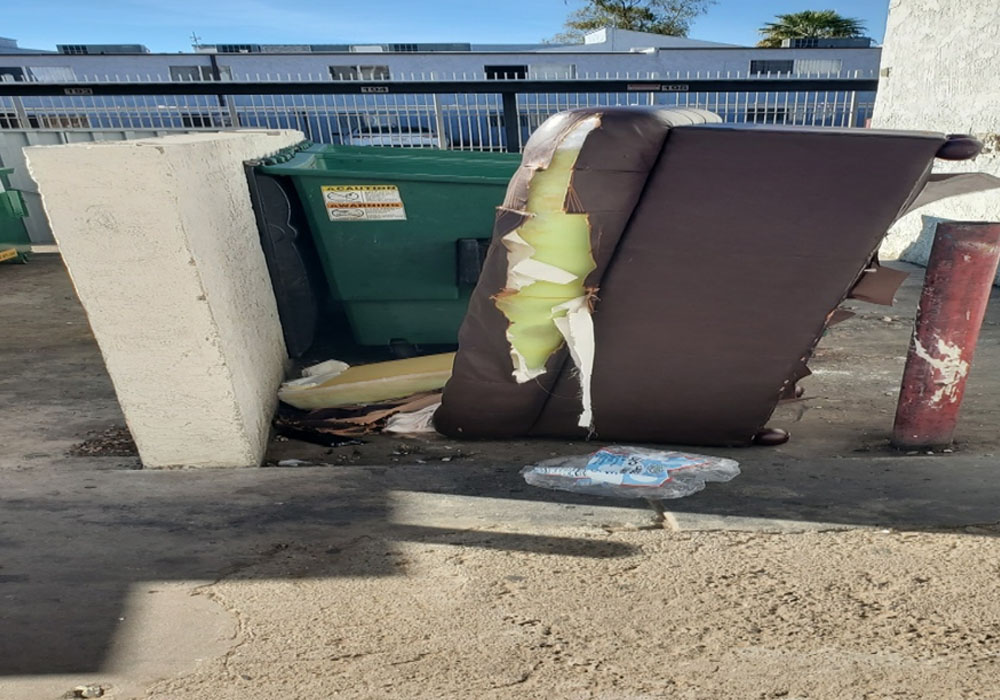
Protecting your real estate investment requires moving away from casual cleanup methods toward a strict, containment-driven bulk extraction workflow. Shoving raw, pest-infested bedding onto a public curb or leaving it leaning against a neighborhood trash enclosure is a direct violation of municipal public health ordinances that can result in hefty city sanitation fines.
To ensure your rental property is stripped of pest-laden debris safely and legally, Dry Heat Junk Removal implements a meticulous containment protocol:
- Source-Level Hermetic Sealing: Our professional field technicians enter your rental unit carrying heavy-duty, 6-mil industrial puncture-resistant plastic film. Before a single mattress or couch is lifted or moved toward the door, it is completely wrapped and taped airtight. This seals all pests and eggs inside the plastic wrap according to the source-isolation protocols detailed by the US Environmental Protection Agency (EPA).
- Safe Interior Egress Logistics: Once the furniture is fully encapsulated, our crew navigates the hallways, door frames, and staircases of your rental property with absolute precision, ensuring zero biological debris drops into your carpets or common areas.
- Direct Landfill Chain of Custody: We load the fully sealed items directly into our secure, enclosed transport trucks and haul them straight to regional landfills authorized to handle hazardous waste, completely bypassing local residential garbage routes and leaving you with a clean regulatory paper trail.
Syncing Furniture Disposal with Your Extermination Timeline
Eradicating a persistent pest problem requires a synchronized strategy between your heavy junk removal provider and your licensed pest control company. Extermination treatments—whether chemical sprays or high-temperature thermal remediation—frequently fail if a rental unit is cluttered with non-salvageable, densely packed household goods.
- Strategic Space Clearing: Removing bulky, heavily impacted mattresses, box springs, and deep carpet padding completely clears the room’s footprint. This gives your exterminator’s equipment direct, unobstructed access to crucial structural treatment areas, such as subfloor seams, baseboard cracks, electrical outlet plates, and closet joints.
- Post-Treatment Property Turnovers: Alternatively, if your property is undergoing professional heat treatments, our teams can coordinate our entry to extract the ruined furniture assets immediately after the heating cycle ends. This ensures that any structurally compromised furniture is safely hauled away after the extreme temperatures have rendered the pests inactive, letting you paint, clean, and get the unit back on the rental market in record time.
Stop a single tenant’s pest issue from ruining your entire real estate investment. Visit Dry Heat Junk Removal or call 602-793-5959 today to secure a professional extraction team and protect your rental property’s long-term value.
Frequently Asked Questions (Landlord Edition)
Can a landlord legally force a tenant to pay for bed bug furniture removal?
While financial responsibility varies depending on the specific terms of your lease agreement and local housing laws, the landlord is universally mandated to maintain a habitable, pest-free dwelling. Most successful real estate investors choose to hire and control the professional disposal process directly to guarantee it is done safely, preventing a tenant’s cheap or improper handling from spreading the pests throughout the entire building structure.
What is the risk of a landlord leaving an unwrapped bed bug mattress on the curb?
Leaving an unwrapped bed bug mattress on a public curb creates a severe public health hazard and can result in significant municipal code violations and fines. Unsealed bedding allows pests to migrate across the concrete into nearby structures or spread to neighboring properties via local wildlife, pedestrian traffic, or unsuspecting scavengers who try to salvage the discarded furniture.
How do professional junk haulers protect the property during a mattress extraction?
Our crews utilize an in-room encapsulation process, sealing every mattress, box spring, and upholstered item inside a heavy 6-mil industrial plastic barrier before it leaves the bedroom. This complete containment ensures that no pests, nymphs, or microscopic eggs can shake loose onto your rental’s carpets, baseboards, or common area walls during transport, aligning with the strict vector containment standards monitored by the Centers for Disease Control and Prevention (CDC)..