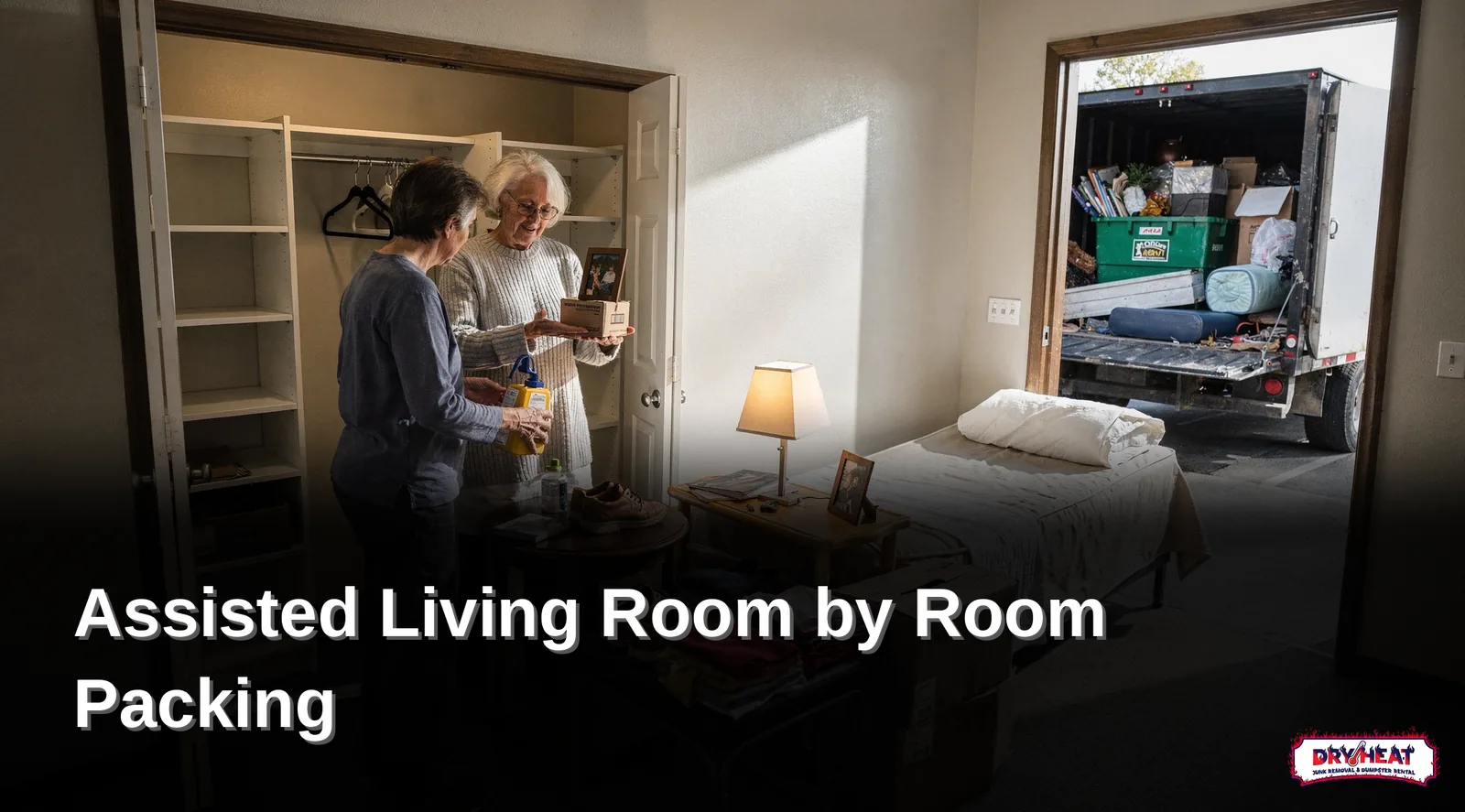
Assisted Living Room by Room Packing Checklist: Junk Removal
By Dry Heat Junk Removal & Dumpster Rentals Editorial Team · Updated 2026-08-05
A room-by-room checklist covers bedroom essentials (clothing, medications, photos), bathroom toiletries, kitchen items if applicable, and living room keepsakes. Dry Heat Junk Removal & Dumpster Rentals, serving Phoenix, AZ with a 2-employee crew, recommends packing 1-2 boxes per room and labeling contents clearly for a smooth assisted living transition.
A room-by-room packing checklist covers bedroom essentials, bathroom supplies, closet items, keepsakes, and paperwork. Assisted living apartments offer limited space compared to a full house. Adult children should sort belongings into keep, donate, and discard piles before move day. Dry Heat Junk Removal & Dumpster Rentals then hauls leftover furniture, mattresses, and household items from the family home, clearing space efficiently.
Key Takeaways
- Pack everyday-use items first, as these essentials support daily assisted living routines most effectively.
- Downsize possessions significantly before moving; most residents occupy limited room space in facilities.
- Create a room-by-room checklist to organize belongings systematically across bedroom, bathroom, and common areas.
- Coordinate with facility staff about 2-3 weeks before arrival to confirm space and restrictions.
What Do You Need Before Packing Begins?
Preparation starts with an honest look at space, not a rush to fill boxes. Assisted living apartments typically offer limited square footage, and families who try to move an entire household into one room lose time, money, and patience on move-in day. A short list of prerequisites, tackled in order, prevents that outcome.
- Measure the new apartment first. Know the exact dimensions before deciding what stays and what goes.
- Scale back the item count. Trade a full dining set or overstuffed closet for a handful of pieces that fit the smaller footprint.
- Sort by daily use. Items used every single day — medications, glasses, favorite chair, family photos — make the final cut before anything else.
- Bring in outside expertise. A senior move manager or professional organizer can map out a downsizing plan before the moving trucks arrive.
- Schedule removal help early. Booking a junk removal appointment ahead of the move avoids last-minute scrambling.
Building an assisted living room by room packing checklist during this planning stage keeps decisions organized by space instead of by emotion, which matters when sorting a lifetime of belongings.
Who Can Help With the Downsizing Process?
Families rarely have to manage downsizing alone. Senior move managers and professional organizers specialize in guiding this exact transition, offering structure when emotions run high. Dry Heat Junk Removal & Dumpster Rentals supports that same process locally, offering no-rush appointments and hands-on help separating keep, donate, and remove piles.
What If Family Members Live Out of Town?
Coordination doesn’t require everyone in the same room. Dry Heat works directly with adult children managing the move remotely, communicating clearly and scheduling around their availability so nothing gets left behind or overlooked.
How Do You Pack the Bedroom First?
Bedroom packing starts with daily essentials, not sentimental items. Families following an assisted living room by room packing checklist should treat the bedroom as priority one. It gets set up first at the new residence and used every single day.
Step 1: Pack wardrobe essentials first. Everyday clothing, pajamas, and other daily-wear items should go into the first labeled box. These are the pieces a parent or resident will reach for immediately, so they belong at the top of the list rather than buried under decor or keepsakes.
Step 2: Sort furniture into “moving” and “staying behind” piles. Assisted living rooms are compact. A dresser or nightstand that fits the new space moves; oversized bedroom sets typically don’t.
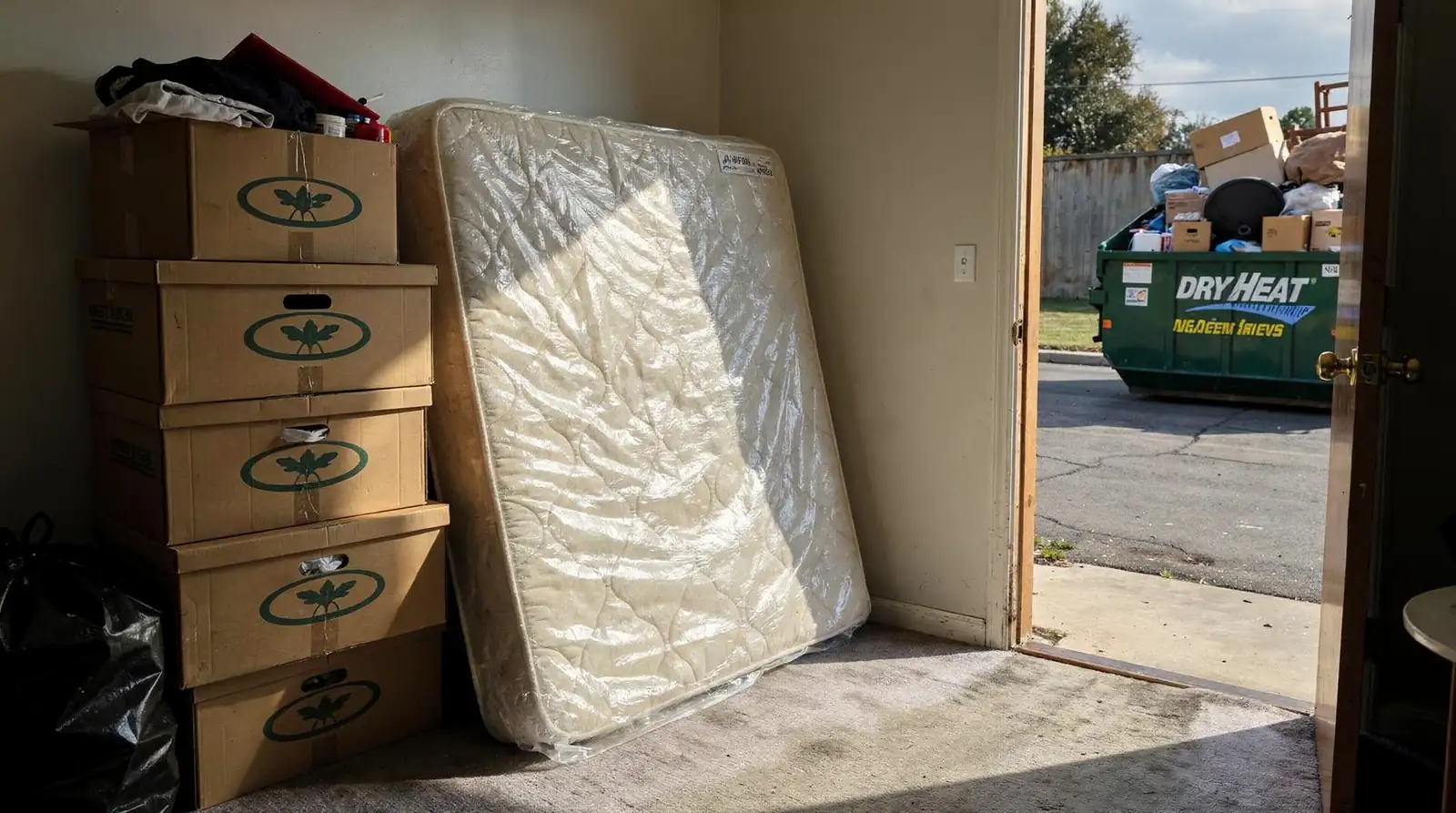
Step 3: Deal with the mattress separately. An old mattress often can’t travel to the new room, especially if it’s worn, stained, or suspected of harboring pests. This is where a specialized removal service matters.
What happens to an old mattress that can’t move with a parent?
Dry Heat Junk Removal accepts both treated and actively infested mattresses, box springs, and full bedroom sets for proper disposal. That coverage matters because a mattress left behind after a move often can’t simply go curbside, particularly if bed bugs are suspected.
Is bedroom furniture removal safe for facility hallways and elevators?
Trained crews seal and wrap infested furniture before it ever leaves the room, preventing pests from spreading through hallways or common areas. Families juggling assisted living and memory care room cleanouts can lean on this discreet handling instead of managing disposal themselves.
How Do You Handle Living Room and Kitchen Items?
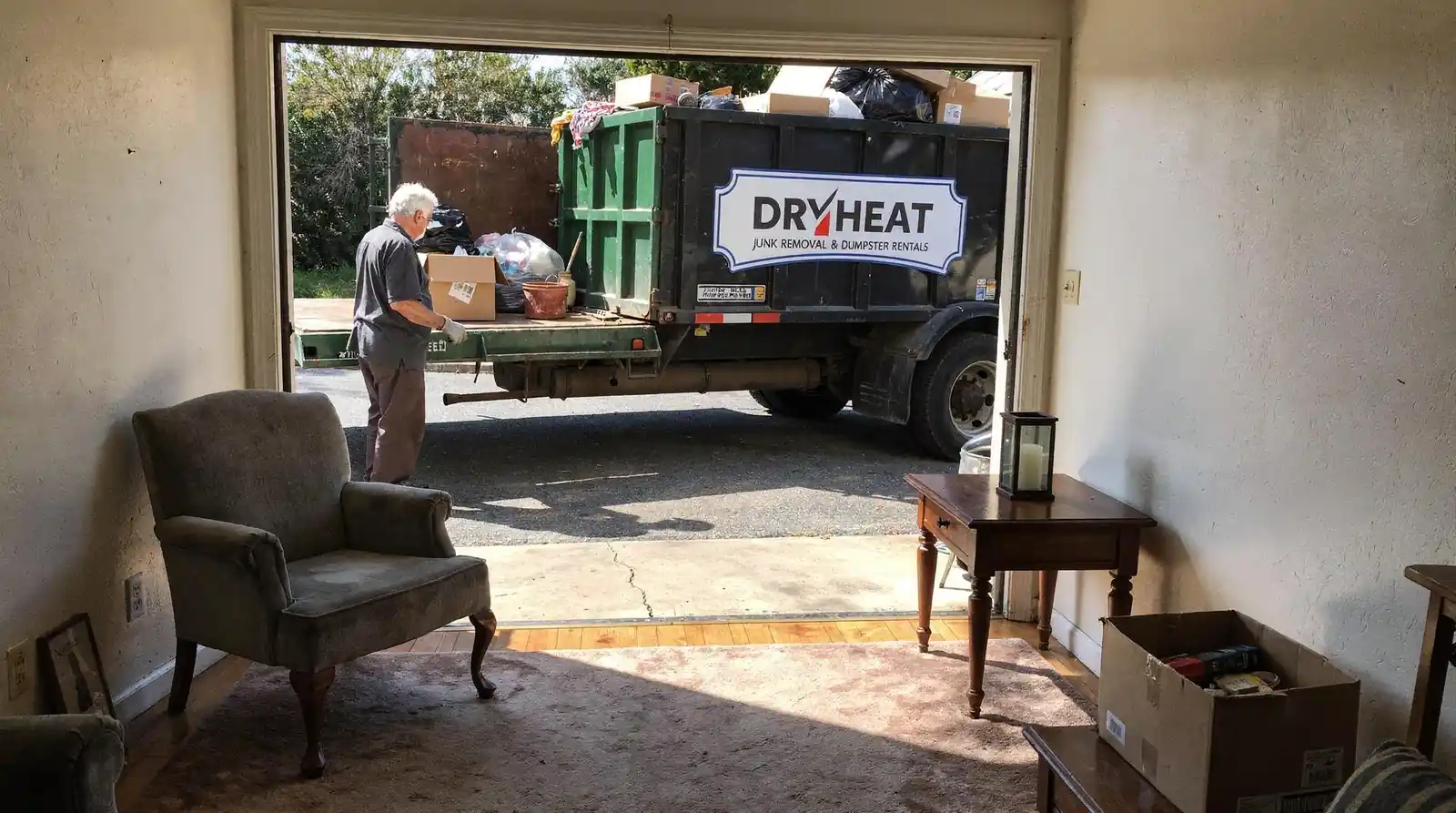
Living room and kitchen items require the same restraint that governs bedroom packing: fewer pieces, not fewer memories. A cramped apartment filled with a full sofa set, end tables, and a complete dish collection creates hazards and clutter rather than comfort. Families who skip this step often find themselves paying movers to haul furniture that gets donated or discarded within weeks. A clear room-by-room assisted living packing checklist prevents that waste and keeps the transition organized from the start.
Follow these steps to sort living room and kitchen belongings before moving day:
- Choose a small number of living room pieces — a favorite chair, a side table, a framed photo — that carry a sense of home instead of packing the entire room.
- Sort kitchen items into three piles: keep, donate, and remove, focusing on daily-use pieces only.
- Schedule a downsizing cleanout to clear excess furniture and kitchen goods that won’t fit the smaller footprint.
- Arrange furniture, appliance, and bulk trash removal for anything left behind after sorting.
- Handle remaining storage areas — garage, patio, or spare rooms — once the living room and kitchen are settled.
What Kitchen Items Should Move to Assisted Living?
Most assisted living apartments include limited counter and cabinet space, so daily essentials matter more than full sets. Small appliances, a few place settings, and frequently used cookware make the cut. Extra dishware and duplicate gadgets typically do not. Removal services handle the surplus so families avoid renting storage units for items that won’t get used again.
Full-set furniture and stacks of unused kitchenware rarely survive the move intact. Proper removal keeps the new space safe, organized, and livable from day one.
How Do You Sort Keep, Donate, and Remove Piles?
Three clearly labeled zones make the process work: a keep pile, a donation pile, and a removal pile. Rushing this step causes families to make decisions they later regret, especially when a parent’s belongings carry decades of memories. Setting a donation area apart from the trash pile, and allowing extra time to think through each item, keeps the process from feeling forced. Families report that this pacing makes the transition feel safe and manageable rather than chaotic.
Follow these steps for a room-by-room sort:
- Walk each room separately and identify furniture, keepsakes, and daily-use items that transfer to the new space.
- Label three zones — keep, donate, remove — using boxes, tape, or sticky notes.
- Set the donation zone apart physically so it doesn’t get mixed into trash removal.
- Take breaks between rooms; sorting an entire household in one sitting overwhelms most families.
- Confirm removal timing with the crew handling pickup once sorting wraps up.
What if the sort turns into a full estate cleanout?
Sometimes a parent’s move follows a loss, and sorting one room becomes clearing an entire house. Estate cleanout services step in for exactly this scenario, handling full-property removal after a death or major family transition.
How do out-of-town siblings stay involved?
Adult children living far away often can’t be present for sorting day. Coordinating remotely with removal crews lets distant family members approve keep/donate/remove decisions by phone or photo before anything leaves the house.
Packing itself represents just one task on a longer list. Movers, utility transfers, and address changes all compete for attention during the same week, which makes efficient sorting even more valuable.
What Mistakes Should You Avoid When Packing?
Four mistakes cause most of the stress families face during an assisted living move: skipping photo estimates, waiting too long to schedule, agreeing to vague pricing, and underestimating how long sorting takes. Each one is preventable with a little planning. Families who work through an assisted living room by room packing checklist early avoid most of these traps entirely.
Why does requesting an estimate without photos cause problems?
Booking a pickup without sending photos first often leads to inaccurate quotes and scheduling surprises. Crews need to see the volume and type of items to size the job correctly. Sending clear photos of furniture, boxes, and bulk items before pickup day lets a crew confirm the scope and avoid delays.
Is it risky to wait until the last minute to schedule pickup?
Waiting too long narrows the options. Same-day or next-day pickup windows exist for families on a tight moving timeline. Availability shrinks the closer the date gets. Scheduling early protects the timeline instead of forcing a scramble.
Other mistakes worth avoiding:
- Skipping the upfront price conversation. Agreeing to removal without a firm, confirmed cost invites unexpected fees once the crew arrives.
- Underestimating the sorting timeline. Downsizing a lifetime of belongings takes real time; families often need months, not days, to organize, decide what stays, and prepare a home for sale.
- Leaving decisions until moving week. Rushed sorting leads to items left behind or accidentally packed for a space that has no room for them.
Avoiding these errors keeps the transition calmer for both the senior and the family coordinating the move.
Moving to assisted living marks a meaningful transition, and thoughtful packing transforms the process from overwhelming to manageable. By working through each room systematically, prioritizing essentials, and making intentional decisions about what truly matters, you create a comfortable, personalized space that feels like home. When downsizing becomes too much to handle alone, professional junk removal teams stand ready to help clear what stays behind, ensuring a clean break and a fresh start in this next chapter.
FAQ
What should you pack first when downsizing for assisted living?
Pack bedroom essentials first, starting with everyday clothing, pajamas, and daily-wear items. The bedroom gets set up immediately and used every day at the new residence.
Who handles leftover furniture and household items after packing?
Dry Heat Junk Removal & Dumpster Rentals, based in Phoenix, AZ, hauls leftover furniture, mattresses, and household items from the family home, clearing space efficiently after belongings get sorted.
Can out-of-town family members coordinate the move remotely?
Yes, Dry Heat works directly with adult children managing the move remotely, communicating clearly and scheduling around their availability so nothing gets left behind or overlooked.
Facts
- Dry Heat Junk Removal & Dumpster Rentals is located in Phoenix, AZ, US.
- Dry Heat Junk Removal & Dumpster Rentals has 2 employees.